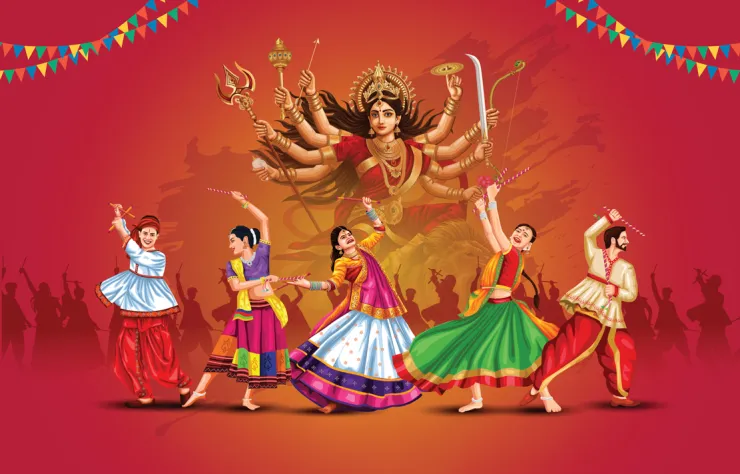
India celebrates numerous vibrant festivals, ranging from major religious events like Diwali (Festival of Lights) and Holi (Festival of Colors) to harvest festivals like Pongal/Onam and national days such as Republic Day, showcasing immense cultural and religious diversity through traditions, colors, food, and community gatherings. Key festivals include Diwali, Holi, Dussehra, Navratri, Eid, Christmas, Ganesh Chaturthi, Raksha Bandhan, and Pongal/Onam , reflecting Hindu, Christian, and regional traditions
Table of Contents
ToggleDIWALI
Diwali is connected to various religious events, deities and personalities, such as being the day Rama returned to his kingdom in Ayodhya with his wife Sita and his brother Lakshmana after defeating the demon king Ravana.[16] It is also widely associated with Lakshmi, the goddess of prosperity, and Ganesha, the god of wisdom and the remover of obstacles.[17] Other regional traditions connect the holiday to Vishnu, Krishna, Durga, Shiva, Kali, Hanuman, Kubera, Yama, Yami, Dhanvantari,
NAVARATRI
Sharada Navaratri is the most celebrated of the four Navaratri, named after Sharada which means autumn. It commences on the first day (pratipada) of the bright fortnight of the lunar month of Ashvin.[12] The festival is celebrated for nine nights once every year during this month, which typically falls in the Gregorian months of September and October. The exact dates of the festival are determined according to the Hindu lunisolar calendar, and sometimes the festival may be held for a day more or a day less depending on the adjustments for sun and moon movements and the leap year.[3][7][13] In many regions, the festival falls after the autumn harvest, and in others, during harvest